
Here’s something worth knowing before the new term gets going: the easiest way to celebrate your child’s personality is to stop comparing it. Picture the school pickup line for a second. Two kids come out of the same classroom, and one is talking before she reaches you while the other hasn’t said a word and won’t for twenty minutes.
Neither of them is doing childhood wrong, and yet almost every parent has quietly wondered whether theirs is the one who should be more like the other. That instinct is worth catching, because you can’t celebrate your child’s personality and audit it at the same time. The two can’t share a room.
Here’s what makes this hard. You’re not comparing on purpose; you’re comparing because comparison is how humans measure anything, and school reports, family gatherings, and group chats hand you fresh material weekly. Nobody sets out to wish their kid were different; it just leaks in sideways.
So the three ideas below aren’t affirmations, and none of them involve telling your child they’re special. They’re practical shifts in what you notice, what you say and what you give them room to do, and each one makes it easier to celebrate your child’s personality on an ordinary weekday rather than in a big meaningful conversation.
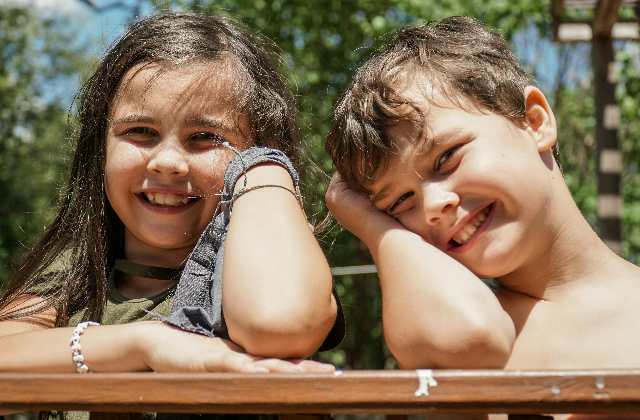
Celebrate Your Child’s Personality by Noticing the Specific Thing, Not the Category
Labels feel like praise, and they mostly aren’t. Calling a child the sporty one, the clever one, the sensitive one, or the funny one hands them a box, and boxes have walls, so the clever one starts avoiding things she might be bad at, and the funny one performs even when he’s miserable. You meant it warmly. They heard a job description.
The fix is smaller than you’d expect. Swap the category for the moment, so instead of “you’re so kind,” try “you noticed Ada didn’t have anyone to sit with, and you moved.” Instead of “you’re so creative,” try “you built that entire thing out of two boxes and a sock.” Specific noticing tells a child you were actually paying attention, and it’s the simplest way to celebrate your child’s personality without handing them a label to live up to.
Try keeping a mental list of three things you noticed this week that had nothing to do with achievement. Not the spelling test or the score she got, but the fact that she asks brilliant questions in the car, hums constantly while drawing, or explains things to her little brother with real patience. Those are the details that let you celebrate your child’s personality rather than their performance, and they’re the ones most of us forget to mention out loud.
Say them at low-stakes moments too. Praise delivered at bedtime or across a car journey lands differently than praise delivered as a formal announcement, because it feels like an observation rather than an evaluation. Kids relax into the first and brace against the second.
One thing to watch. Specific noticing loses its power fast if you do it constantly, so don’t turn every interaction into commentary on your child’s character. Two or three genuine observations a week beats a running narration, and children can absolutely tell when you’ve started saying things because a parenting article told you to.
There’s also a version of this that goes wrong in the other direction. If you only ever notice the traits you personally like, you’re still shaping them toward an ideal, just a warmer one. The point is to see the whole shape of them clearly, including the stubbornness, the intensity, and the bits that make your life harder, because you can’t truly celebrate your child’s personality if you’ve only been looking at the half you like.
Celebrate Your Child’s Personality by Changing Three Sentences You Say Without Thinking
Most comparison doesn’t arrive in big conversations. It arrives in throwaway lines you say while driving, cooking, or getting everyone out the door, and those lines do more shaping than any heartfelt talk ever will. Fix three of them, and you’ve changed the background noise your child grows up inside.
Start with the sibling comparison, which is the most common one and the most invisible. “Why can’t you get ready like your sister does” feels like motivation and functions as a ranking, and the child hearing it learns that there’s a correct sibling and it isn’t them. Swap it for the behaviour on its own: “I need shoes on by eight.” Same instruction, no league table attached, and you can still be firm about it.
The second one is the reassurance that quietly agrees with the criticism. When your child says nobody talks to them at lunch and you answer “don’t worry, you’ll come out of your shell,” you’ve just confirmed that the shell is a problem and they’re behind schedule on leaving it. Try “that sounds lonely, tell me about lunch” instead, which lets them describe the actual situation rather than defend their temperament. You can help them make friends without implying they need renovating first.
The third is the one parents say to other adults with the child standing right there. “Oh, she’s the shy one” or “he’s my difficult one” gets said at parties, school gates, and family lunches constantly, and kids absorb those introductions completely. Describe what they’re doing instead, so “she’s taking a minute to warm up” or “he’s got strong opinions about seating.” It costs you nothing, and it lets you celebrate your child’s personality in front of an audience rather than apologise for it.
Notice what these three swaps have in common. Each one replaces a judgement about who your child is with a plain description of what’s happening, and that gap is where comparison lives. Descriptions are neutral, while judgements need a scale, so swap them often enough and you’ll celebrate your child’s personality without adding a single extra compliment.
You’ll get these wrong regularly, and that’s genuinely fine. The goal isn’t a perfect script; it’s catching yourself often enough that the ratio shifts, and children are far more responsive to the overall pattern than to any single sentence. If you say something clumsy, you can simply name it later: “I called you my shy one earlier, and that wasn’t fair.”
One honest caveat. Changing your language doesn’t change what you actually think, and kids read the second thing far better than the first, so if you privately wish your child were more outgoing, careful phrasing will only get you so far. The words are worth fixing, but the real work is sitting with the mild disappointment and letting it go rather than dressing it up. That’s the harder half of learning to celebrate your child’s personality, and nobody puts it on a poster.
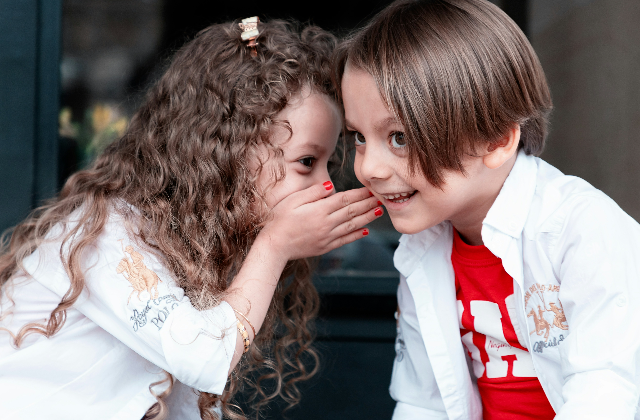
Celebrate Your Child’s Personality by Protecting What They Do When Nobody’s Asking
Watch what your child does with a genuinely empty hour. Not a scheduled activity, not screen time, but a real gap with no instructions in it. Whatever they drift toward is the clearest information you’ll ever get about who they are, and most of us schedule that gap out of existence before it can tell us anything.
The drift is worth protecting precisely because nobody’s watching it. A child who reorganises her figurines into families, narrates elaborate stories to the dog, or takes apart a broken remote for no reason is showing you something no report card measures. You can’t celebrate your child’s personality if you never leave it enough room to show up.
So audit the week honestly. Count the hours that are genuinely unstructured, and if the number is close to zero, that’s your first fix, not a new enrichment class. Kids need boredom the way they need sleep, and the interesting stuff only surfaces once the boredom has been sat through rather than rescued from.
Then resist improving what you find. If she loves drawing, don’t immediately buy the course, book the class and start asking about her progress, because the fastest way to kill a child’s private interest is to make it a project with adult expectations attached. Supply the materials, stay quiet, and let it stay hers, because sometimes the best way to celebrate your child’s personality is simply to leave it alone.
There’s a harder version of this. Sometimes the thing they gravitate toward is something you find boring, pointless, or a bit embarrassing, and that’s the real test of whether you truly celebrate your child’s personality or just curate it. A parent who backs the interests they’d have chosen anyway isn’t doing anything difficult. Backing the ones that make you slightly uncomfortable is where it counts.
Ask about it occasionally, with genuine curiosity rather than assessment. “Show me the one you’re most pleased with” works better than “is it finished,” and “what made you pick that” beats “have you thought about entering it.” Questions that assume worth land differently than questions that measure it.
One limit worth naming. Protecting their drift doesn’t mean abandoning structure, and a child with no routine, no expectations and no push isn’t free; they’re unmoored. You’re carving out a protected pocket inside a normal life, not handing over the whole schedule, and the pocket only feels safe because everything around it is predictable.
Here’s what all three sections come down to. You celebrate your child’s personality by noticing precisely, speaking plainly, and getting out of the way often enough that there’s something to notice. None of it requires a conversation about how special they are, and honestly, the kids who feel most secure in who they are rarely got told. They just got watched properly by someone who liked what they saw.
What to Try This Week
Pick one evening and do nothing but watch. No corrections, no suggestions, no gentle steering toward something more productive, just an hour where you observe your child doing whatever they’d do anyway. It’s the quickest way to celebrate your child’s personality, and most parents are surprised by what they see because they haven’t looked without an agenda in months.
Write down three things you noticed afterwards. Not achievements, just details, like the way she narrates while she works or how he reorganises things before he starts. Those notes are your evidence that you already know how to celebrate your child’s personality, and they’ll keep you steady the next time a school report or a family comment makes you wonder whether your kid should be different.
Then say one of them out loud to your child sometime this week, casually, with no build-up. That’s it. That’s the whole practice, and it works better than any conversation about being yourself ever has.
The comparison instinct won’t disappear, by the way. It’ll show up again at the next parents’ evening and the next birthday party, and the goal was never to eliminate it. It’s just to notice it faster than you used to, and to keep choosing to celebrate your child’s personality exactly as it is.

Leave a Reply
You must be logged in to post a comment.