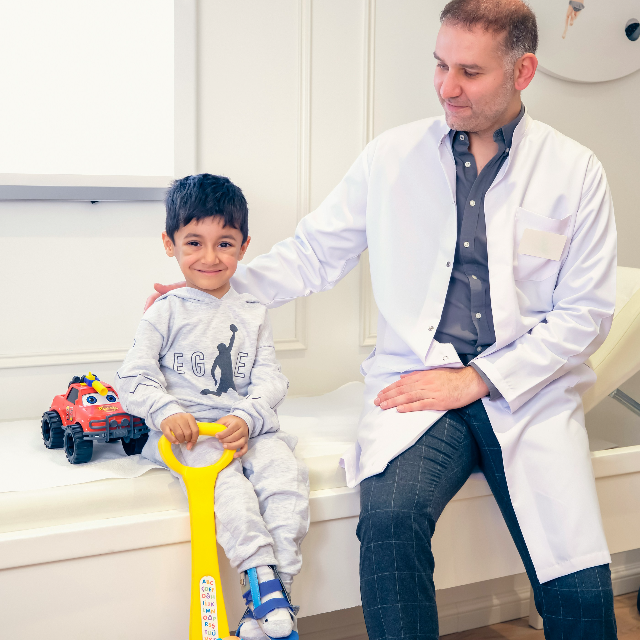
Here’s what surprises most parents: your child probably isn’t afraid of the needle. Ask a nervous six-year-old what they’re dreading and you’ll usually get something else entirely — not knowing what’s about to happen, a stranger touching them, being held still, or the smell of the place. The needle gets blamed because it’s the only part with a name.
That matters, because you can’t reassure a fear you’ve misidentified. Telling a child the injection is quick does nothing if what’s actually frightening them is being trapped on a bed while an adult they’ve never met looks in their ears.
So the four ideas below start with finding out what your particular child is scared of, then work outward from there. Each one is designed to make doctor visits easier for nervous kids by removing uncertainty rather than by promising them it won’t be bad.
None of it requires bribery, and none of it involves telling them there’s nothing to worry about. That sentence has never once worked on anybody.

Find Out What They’re Actually Afraid Of Before You Reassure Anything
Start this conversation days early, not in the car park. A child asked about their fears while walking, drawing or lying in bed at night will tell you far more than one asked while being buckled into a car seat outside the surgery. Timing does most of the work here.
Ask specifically rather than generally. “What’s the worst bit about going to the doctor?” gets you an answer, while “are you nervous?” gets you a shrug or a no. Follow up with “what happens right before the worst bit?” because that’s usually where the real fear lives, and it’s often something you’d never have guessed.
Listen to the whole answer without correcting any of it. If they say they’re scared the doctor will keep them there, resist explaining that doctors don’t do that, and instead ask what makes them think it. You’re gathering information, not running a debate, and every correction teaches them to stop telling you things.
Expect the answer to be strange. Kids fear the paper on the bed, the blood pressure cuff squeezing, being weighed, having to undress, the doctor writing things down about them, or that they’ll be told something is wrong with them. Adults consistently guess needles and consistently guess wrong, which is why blanket reassurance fails to make doctor visits easier for nervous kids.
Once you know the real fear, you can do something targeted about it. Scared of the cuff? Ask the nurse to demonstrate on you first. Worried about undressing? Bring a dressing gown and ask if the top can stay on. Frightened of being alone with a stranger? Ask if you can hold their hand throughout, which almost every practice will say yes to.
Write the fears down and take them with you. A short note handed to the receptionist or mentioned as you sit down — “she’s worried about the ear thing, could you show her first?” — takes ten seconds and changes the entire appointment. Doctors deal with anxious children constantly and are usually glad to be told what’s going on.
One caveat: don’t over-interview them. Three good questions across a week is plenty, and repeatedly circling back to how they’re feeling signals that this is a big, frightening thing worth dwelling on. Ask, listen, act on it, then let the subject drop.
Tell Them the Truth About What Will Happen, Including the Bad Parts
The most damaging sentence in this whole situation is “it won’t hurt.” Say it about an injection, and you’ve spent your credibility in one line, because it does hurt, briefly, and your child now knows you’ll lie to get them through a door. Every future appointment starts from a worse position than this one did.
Honesty works better, and it works immediately. Try “it’ll feel like a hard pinch for about two seconds, then it stops,” which is accurate, small enough to hold, and gives them a defined end point. Children handle predicted discomfort far better than they handle vague promises that collapse on contact.
Walk them through the sequence in order, in plain language, a day or two before. You’ll wait in the room with the fish tank, we’ll be called, the doctor will ask how you’ve been, she’ll listen to your chest with the cold thing, she’ll look in your ears, then the injection, then we leave. A child who knows the running order has nothing left to dread except the parts they already know about.
Include the boring bits deliberately, because they’re doing more work than they look like they’re doing. Knowing there will be a wait, that you’ll go up in a lift, that the doctor types on a computer — none of that is reassuring exactly, but it removes the surprise, and surprise is what turns nervousness into panic in a small child.
Be honest about what you don’t know too. If you’re not sure whether there’s an injection this time, say that rather than guessing, and add what you’ll do about it: “I don’t know yet, and I’ll ask as soon as we sit down so you’re not wondering.” That’s more useful than false certainty, and it’s a big part of what makes doctor visits easier for nervous kids over time.
Give them accurate information about the things that genuinely aren’t scary, as well. Most appointments involve no needle at all, most take under ten minutes, and nothing that happens requires them to be brave in any dramatic sense. Kids often carry a wildly inflated picture of what a check-up involves, and correcting it downward with facts is fair rather than reassuring.
Avoid the rehearsal trap, though. Talking about it once, clearly, a day or two ahead is right; talking about it repeatedly across a week turns it into the main event and builds the dread you’re trying to prevent. Say it well, then move on to something else entirely.
And watch your own tone while you say it, since children read that before they process the words. Deliver the whole sequence in the same voice you’d use to describe a trip to the post office, because a parent explaining in a careful, gentle, slightly too-serious voice has already told the child this is a big deal.

Give Them One Job to Do in the Room
Nervous children go passive in medical settings. They get lifted onto a bed, held, examined, and talked over while adults discuss them, and that total loss of control is what turns manageable nerves into full resistance. Most difficult doctor visits are really just a child with nothing to do and nowhere to put their hands.
So hand them a job before you walk in, and make it a real one. Holding the appointment card, carrying the water bottle, telling the doctor their own symptoms, counting to ten during the injection, or holding the plaster ready. Small jobs give a child a role other than patient, and that shift changes how doctor visits feel from the inside.
Let them do the talking wherever they can. Even a five-year-old can say where it hurts and how long it’s been going on, and most doctors will happily address the child directly if you stay quiet long enough. Parents fill silences fast, and every answer you supply is one your child didn’t get to give.
Offer a choice on anything that’s genuinely optional. Which arm, sitting on the bed or on your lap, ears first or chest first, plaster or no plaster. None of it changes the medicine, and all of it returns a bit of control, which is why choice is one of the most reliable tools for tense doctor visits.
Give them something for their hands too. A fidget toy, a squeezed hand, a favourite small object from home, or simply gripping your fingers hard on a count of three. Bodies need somewhere to put fear, and a child with nothing to hold will typically use their whole body to resist instead.
Ask the practice for what you need rather than hoping. Requesting a longer appointment slot, a quieter time of day, or the same doctor each time costs one phone call and improves doctor visits more than anything you can do in the room itself. Reception staff hears this request constantly, and it isn’t a strange thing to ask.
For a child who’s genuinely panicking, drop the jobs entirely and do less. Fewer instructions, quieter voice, no cheerleading, and let the doctor work quickly while you hold them steady. Trying to manage a distressed child through an activity makes doctor visits harder, not easier, and there’s no prize for getting through it elegantly.
One thing not to do: never promise there won’t be an injection to get them into the room. Even if you’re fairly sure, say you’ll ask, because a child who’s been walked into one broken promise will fight ten times harder at every appointment that follows.
- Handle the Aftermath Properly So the Next Visit Starts Better
Most parents treat the appointment as finished the moment they reach the car. It isn’t, because what your child concludes about the experience gets decided in the next twenty minutes, and that conclusion is what they’ll carry into the next one. Every appointment is quietly writing the script for future doctor visits.
Start by not overdoing the sympathy. Big relieved hugs, “you poor thing,” and a long debrief about how awful that was all confirm that something terrible just happened to them. Keep it low-key instead — “right, done, what do you fancy for lunch?” — because your calm is the strongest evidence they have that doctor visits are ordinary.
Skip the reward if you can, or at least don’t announce it in advance. A promised treat frames the appointment as an ordeal requiring compensation, and children work that logic out fast. A spontaneous stop afterwards is fine; a bribe negotiated in the waiting room teaches them this was worth being afraid of.
Do name what they actually did, specifically. Not “you were so brave,” which is vague and slightly implies they had to be, but “you told the doctor about your ear yourself” or “you held still for the whole thing.” Specific noticing gives them concrete evidence of their own competence, and that evidence is what makes the next appointment start from a better place.
Then check what they took away, a day or two later. Ask what the worst bit turned out to be, and whether it matched what they expected. Children frequently discover the dreaded part was fine and something else was worse, and knowing that gives you far better information for the next round of doctor visits than your own impression does.
Correct the story if it’s drifted. Kids reconstruct events, and by Friday a two-second injection can have become a long ordeal, so gently anchor it back — “it was quick, wasn’t it, you counted to three and it was over.” Say it once, without arguing, and let the accurate version sit alongside theirs.
Fix the practical things while they’re fresh. If the wait was the problem, book earlier next time. If the room was the problem, ask for a different one. Small logistical adjustments compound across years, and they do more to improve doctor visits than any amount of pep talk.
And if it went badly, resist declaring it a disaster in front of them. A child who hears their parent describe the appointment as awful on the phone that evening has just been told their fear was correct. Save that conversation for later, and let their version of doctor visits stay as neutral as you can manage.
What This Looks Like a Few Years From Now
You’re not trying to fix this appointment. You’re building a child who eventually walks into a surgery without their stomach dropping, and that takes several years and a run of appointments that each went slightly better than the one before.
Which means a bad visit isn’t a failure, it’s just one data point in a long series. Plenty of children scream through a check-up at four and handle one calmly at seven, and the difference usually isn’t a technique that finally worked. It’s accumulated evidence that this thing keeps turning out to be survivable.
So keep your promises small enough to keep, tell the truth about the uncomfortable parts, and let each appointment end as neutrally as you can manage. Those three habits compound quietly.
And somewhere down the line you’ll notice they walked in ahead of you without looking back — which is the whole point, and it tends to happen without any announcement at all.

Leave a Reply
You must be logged in to post a comment.