
Babies are undeniably adorable, and they often display characteristics that make us laugh and forgive them for any fussiness they may have caused. Yet, there are times when parents may wonder about certain behaviors their babies exhibit, such as the peculiar sleeping position where babies sleep with their butts in the air.
While parents may have learned how to feed, clean, and put their babies to sleep, they may not have considered the idea of their baby’s sleeping pose. As babies grow, they tend to create new sleeping positions for themselves, which may seem amusing at first. However, this particular sleep position is known as “The Frog” position and is quite common among infants.
When I first saw my baby sleeping in this position, I couldn’t help but laugh and call my husband over to witness it. At first, it seemed funny, but I soon became concerned that it might turn into a bad habit. However, after years of childcare, I came to understand why babies sleep with their butts in the air.
In this article, I will share my experience and provide you with a guide to everything you need to know about this sleeping position. It is essential to understand that this position is natural and poses no harm to your baby. In fact, it may even have benefits for their development.
- Why Do Babies Sleep With Their Butts In The Air?
- Is It Dangerous For Babies To Sleep With Their Butts In The Air?
- Should I Keep Flipping Them Onto Their Back?
- How Do I Keep My Baby Safe If They Roll On Their Tummy To Sleep?
- Should I Be Worried About My Baby Sleeping With His Butt In The Air?
- Myth That Surrounds Sleeping With Butts In The Air
- Proven Tips To Ensure Safe Sleep For Your Baby.
- Is It Okay For Newborns To Sleep With Their Heads To The Side?
- Do Babies Sleep Better With Moms?
- Can Babies Sense You're Not Sleeping In The Room With Them?
- Why Do Babies Like Their Butts Patted?
- What Is The Best Sleep Position For My Baby?
- Sleep Habits To Reduce Sids
- Final Thought
Why Do Babies Sleep With Their Butts In The Air?
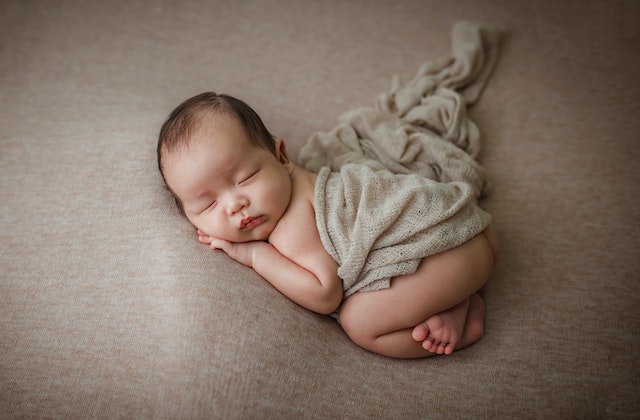
1. Fetal position
Muscle memory is a fascinating phenomenon. Have you ever marveled at how pianists can play complex pieces without looking at the keys? Or how you can perform various tasks with ease simply because you’ve done them repeatedly?
Similarly, babies experience muscle memory. After spending nine months in the womb, their muscles become accustomed to a particular position, and muscle memory takes over. As a result, it is natural for babies to feel comfortable sleeping in a position that mimics the one they were in while in the womb.
Sleeping in this position can also have a calming effect on babies. It recreates the feeling of being in a small and secure space, similar to the womb, which can help them feel safe and secure. Additionally, it can promote better sleep by allowing them to regulate their body temperature and reduce the likelihood of flat spots forming on the back of their heads.
It’s important to remember that babies develop at their own pace, and their sleeping position can vary. However, if your baby is sleeping with their butt in the air, there is no need to be concerned. It is a natural position that can provide comfort and benefits for your little one.
2. Comfortable
Just like adults, babies sleeping at this stage are capable of identifying what works best for them. The sole motivation of every human is comfort. It is this mandate that your baby is upholding when they are cuddled up in this position. It is because they feel quite comfortable with it.
3. Warmth
If your baby is sleeping in this position, it’s probably a result of a cold. When babies feel cold, they try to fold up to bring themselves warmth. Looks like they are getting things figured out on their own. It’s a basic human instinct.
As your baby grows, some basic human instincts develop with them; folding up to get warmth during cold is an example.
4. Learning to crawl
This frog position is also a replica of what your baby looks like when he/she tries to walk. Sleeping in this position can be a clear indication that they have already begun the crawling phase; they are learning to crawl.
5. Helps relieve stress or stomach ache
This frog position requires that your baby sleeps with the tummy against the mattress. This helps to put pressure on the abdomen to help reduce the pain of a stomach ache.
In addition, babies just do this to relieve stress. Simply put they do it because they like it.
Are you having that question on your mind about what could be stressing a baby?
Lol. A lot can stress your baby. Anything capable of causing them discomfort is stress.
6. Sign of growth
The most obvious reason for your baby sleeping with her butts in the air is that she is growing. When they are born, they have a hard time rolling. They only stay fixed to the position you place them in.
Growth comes with them being able to roll over from side to side. Another stage of growth is their ability to roll on their back and to their front easily. At this stage, they’ve grown and are less susceptible to sudden infant death syndrome (SIDS).
7. Feels like being held
As earlier discussed, muscle memory is interesting. Babies when held by their moms assume this same position. Sleeping in the same position helps them replicate that feeling. Most people take this as a sign that their baby likes being held; it could be.
8. Falling asleep in the middle of a play
There are two categories of people blessed with the ability to fall asleep easily; the old and infants. Babies tend to fall asleep in the middle of a play. This position might be that they fell asleep in the middle of a play while sitting upright. It’s very easy for them to do.
Is It Dangerous For Babies To Sleep With Their Butts In The Air?
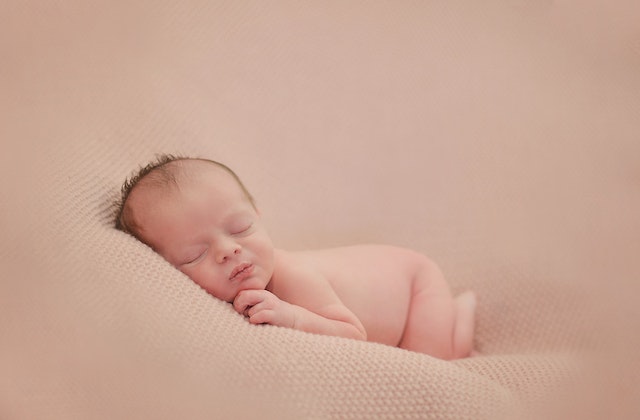
The level of danger attached to babies sleeping with their butts in the air is relative. Sleeping on the tummy, as seen in this sleep position, is a dangerous sleep position; it has a great risk of sudden infant death syndrome (SIDS). Nevertheless, if your baby is taking this sleep position, he/she must have grown and now have a very low risk of suffering from SIDS.
If your baby can’t roll on their own, sleeping on their tummy is dangerous.
If your baby can roll on without you, it is not a problem. It shouldn’t be a problem.
Should I Keep Flipping Them Onto Their Back?
If you’re worried about your baby falling off or injuring herself or SIDS, you should try to flip her on her back when she is asleep. However, if she keeps flipping herself back, it’s advised that you let her be.
NB: If your baby chooses to sleep in this position and you’re not okay with it, wait till she’s fast asleep before flipping her. Flipping her while she is still awake might lead to a lot of regrets and a new battle to get her to sleep.
How Do I Keep My Baby Safe If They Roll On Their Tummy To Sleep?
It’s recommended that babies be made to lie on their backs for the first 4-6 months. In this period, they are laid in a bassinet. If your baby tends to roll on their tummy around this age, you help flip them onto their back.
Studies have shown that babies in their early months are at high risk of sudden infant death syndrome (SIDS) when they sleep on their tummy.
Furthermore, babies who have grown into using cribs (i.e. babies who are more than 6 months old) are more liable to roll over to any of their preferences. To keep them safe, avoid placing suffocating materials in their crib.
Should I Be Worried About My Baby Sleeping With His Butt In The Air?
You shouldn’t be worried about your baby keeping to this position. Babies mostly stick to this sleeping pose at a point in their lives when it can’t cause them harm from SIDS. You should, however, be worried about their mobility and safety now.
Myth That Surrounds Sleeping With Butts In The Air
Human nature has a way of setting up beliefs about everything they can’t explain. It is almost like they feel better with a belief that helps fill their lack of knowledge of that particular phenomenon. Baby’s frog sleeping position was able to attract some strange beliefs about it as well. These beliefs include:
1. Scared Babies:
There’s a belief with a strong opinion that babies who end up sleeping in this position are showing signs of fear; they are scared babies.
If this is true, then fear should be common with a lot of babies because a lot of babies sleep like this. There’s no scientific or logical explanation to bring into the relationship between a baby’s fear and this sleeping pose. It’s a mere fallacy.
2. Praying for a sibling:
A ridiculous school of thought believed that babies who sleep like this are asking for a sibling. It makes you worried as a mother (if you ask the wrong people) how you’d want to go through the whole process so fast.
You might even ask how a baby who knows nothing would be asking for a new sibling. Anyway you think of it, it is ridiculous.
3. Bowlegged baby:
Another school of belief has it that babies who sleep in this position have a high tendency to have a bow leg when they grow older and start to walk. This, however, is incorrect because a lot of babies sleep like this and turn out with a straight leg.
4. Delayed walking:
A set of people believed that sleeping in this position can lead to a fault in the walking process of the baby. This is wrong and not true.
5. Hinders blood flow:
Another myth about frog position is that it hinders the proper flow of blood in the baby’s body. Further studies have shown that babies happen to have better blood flow in that position as opposed to this wrong belief. \
However, babies can have a cramp in that position; this is if they do it for a long time. This is just the same way you and I would have cramps from sitting for too long
6. Someone nearby is pregnant:
This is another hilarious myth that proposes that babies do this sleeping position when someone near is pregnant. This belief buttresses the belief that a baby is asking for a sibling and saying that the baby is sensing a companion; it could be a sibling, neighbor, or family member.
NB: These myths are not to be believed. They are not true.
Proven Tips To Ensure Safe Sleep For Your Baby.
- Observe your baby to see if they can roll to any side easily.
- Keep away any material that can suffocate the baby.
- Use a firm surface like the baby’s crib.
- Pillows and heavy shit should not be found around the crib.
- Sleep in the same room with the baby: This helps to keep a look and attend to their needs from time to time.
- Do not smoke in the same room as your baby. Smokers should abstain from smoking while they take care of a baby. If at all you must smoke, take it outside the house.
- Only use light blankets for your baby’s crib bedding. Avoid using weighted blankets.
- It is okay to swaddle your baby if they are not able to roll over on their own yet. While setting up your baby in a swaddle, you should make use of tight but light materials to avoid overheating.
- Avoid swaddle when you observe that your baby can roll over independently. Using a swaddle when they can roll might be dangerous.
Is It Okay For Newborns To Sleep With Their Heads To The Side?
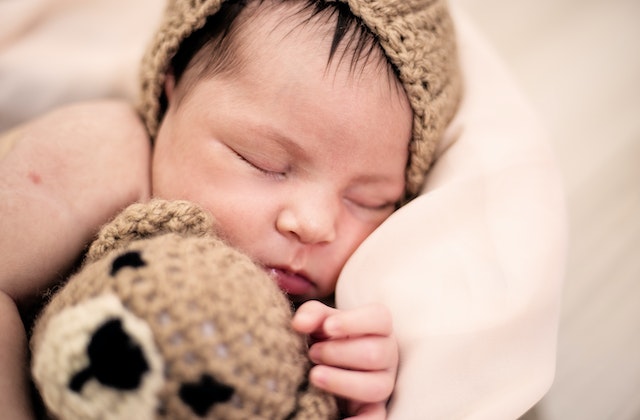
Babies’ bones are very fragile; they are still developing. It is important to know that keeping them sleeping with the back of their head always might subject them to a certain kind of pressure that might affect the skull.
Therefore, it is imperative to alternate which side of their head is used as they grow. When your baby grows and their skull bones are stronger, they’ll choose their preferred and comfortable sleeping pattern.
Do Babies Sleep Better With Moms?
Human psychology is interesting. Baby psychology is even more fascinating. Babies, just like you and me, want safety. The same reason you feel better in your neighborhood compared to living in a war zone.
The same reason you’d choose to live in a healthy environment over a ghetto.
Your baby would sleep better knowing that you’re around. Babies sleep better with moms because they feel safe.
NB: Sleeping with the mom should be done in the arm or crib. It’s not advised to sleep with the baby on the same bed.
Can Babies Sense You’re Not Sleeping In The Room With Them?
As I said earlier, baby psychology is interesting. It’s amazing when you learn how fast babies develop. Babies at some point can develop the sense of recognizing their environment. They can feel an object and know the status of that object; this is called object permanence. Babies know that when things that are around them are no more, they still exist.
Babies can feel this when you are not with them.
Why Do Babies Like Their Butts Patted?
Just like you enjoy a soft massage now and then, babies want to be patted just for the soothing relief that comes with it.
What Is The Best Sleep Position For My Baby?
The best sleep position that has been advised to parents over and over is laying them on their backs. Sleeping on the back is regarded to be the safest sleep position as it has the lowest risk of sudden infant death syndrome (SIDS).
It’s recommended that babies in their first 6 months should only sleep with their back on the bassinet or crib mattress (depending on how fast they outgrow their bassinet).
Sleep Habits To Reduce Sids
- Get a firm sleep surface: Avoid putting them on soft surfaces. Babies who sleep on firm surfaces have a low risk of SIDS.
- Lay your baby on their back: Laying babies on their backs showed a reduction of about 50% online rate of children dying from SIDS.
- Keep the sleeping area clear and clean.
- Make the baby sleep near to you but separate.
- Monitor room temperature.
- Adopt the use of a sleep sack.
- Try pacifier: Pacifiers have proven to be very effective in reducing SIDS in infants as it helps keep them in the right frame of mind.
- Keep babies from sleeping on their side.
Final Thought
In summary, it is essential to ensure your baby gets adequate and comfortable sleep. If your baby sleeps with their arms or butt up in the air, there is no need to worry, as it is likely what feels most comfortable to them.
The way babies sleep is often a source of wonder, and there is no mystical belief surrounding a baby sleeping with their butt in the air. However, it is crucial to remember that babies are fragile and need proper care and attention.
As a parent, it is your responsibility to keep your baby healthy. This involves observing their response to their environment and seeking timely medical consultation if necessary. By paying attention to your baby’s needs and providing a safe and nurturing environment, you can help ensure they grow and thrive.

Leave a Reply
You must be logged in to post a comment.