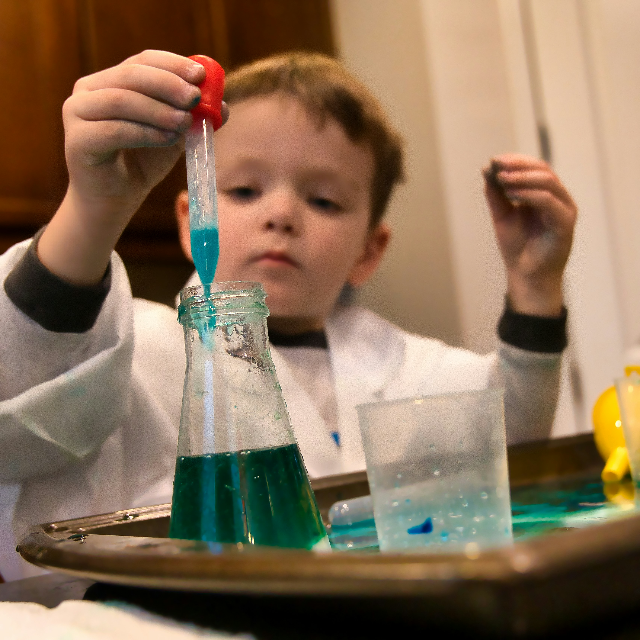
Did you know you can turn your kitchen into a science lab—with nothing but baking soda, food coloring, and a curious little helper? Get ready, because this is about to be so much fun. Science doesn’t have to be boring or full of hard-to-pronounce words. In fact, the best science experiments your kids will love are the ones that look like magic and feel like play.
Whether you’re battling rainy-day boredom or just want to sneak a little learning into your weekend, these experiments are pure gold. They bubble, fizz, change colors, and even float through the air—and you don’t need a fancy degree or expensive supplies to pull them off. All you need is a sense of adventure (and maybe a towel or two for the mess).
This isn’t just about fun—it’s about sparking curiosity, building confidence, and showing your kids that science is all around them. And the best part? You’ll love watching their faces light up just as much as they’ll love doing the experiments.
Ready to turn your living room into the coolest classroom ever? Here are four fun and easy science experiments your kids will love—and beg to do again and again!

Make a Rainbow in a Jar: A Colorful Science Experiment Your Kids Will Love
Get ready to wow your little scientist with one of the most eye-catching science experiments your kids will love! This rainbow in a jar isn’t just beautiful—it’s a super fun way to explore the concept of density. And the best part? You only need a few things from your kitchen.
Here’s what you’ll need:
- Honey
- Dish soap (the colorful kind works best!)
- Water
- Cooking oil
- Rubbing alcohol
- Food coloring (various colors)
- A clear glass or jar
- A spoon
Now for the fun part—building your rainbow!
Start with honey. Carefully pour a small amount into the jar. It’s thick, golden, and will sit nicely at the bottom. Next comes the dish soap. Slowly drizzle it on top of the honey. Already, you’ll start to see distinct layers forming. That’s the magic of density in action—and it’s one of the coolest science experiments your kids will love.
Now, take your water and add a drop or two of food coloring (pick a different color from the soap!). Pour the water in gently, using the back of a spoon so it doesn’t mix too fast. Watch how it forms its own layer. Your rainbow is coming to life!
After that, pour in your cooking oil the same way—slow and steady. Oil floats on water, which adds another layer to your density masterpiece. Finally, mix rubbing alcohol with a splash of food coloring and add that as your top layer. Use a spoon to control the pour, and voila—you’ve made a rainbow in a jar!
Why does this happen?
This experiment shows how different liquids have different densities. In simple terms, some are heavier and some are lighter. That’s why they don’t mix and instead create these beautiful, stacked layers. It’s science in full color—and it’s one of those science experiments your kids will love because they get to see it, not just hear about it.
But the learning doesn’t stop there.
Ask your child questions as they watch the rainbow form. “Why do you think the oil stays on top?” “What do you think would happen if we stirred it?” This kind of back-and-forth keeps their curiosity burning and helps them think like a scientist. Science experiments your kids will love always combine fun with thinking—and this one does both perfectly.
Want to switch it up? Try these fun twists:
- Use corn syrup instead of honey for an even denser bottom layer.
- Try layering liquids in different orders and guess what will happen.
- Add glitter to one layer for a sparkly surprise!
This experiment is perfect for all ages, and it’s low-mess if you pour carefully. You can even tie in lessons about color mixing, layering, and predictions. It’s a brilliant way to bring learning into your home in a hands-on, unforgettable way.
When it comes to science experiments your kids will love, this one checks all the boxes: it’s bright, surprising, and incredibly satisfying to create. Plus, once it’s done, you can leave it on a windowsill as a colorful science trophy!
Watch Lava Lamps Come to Life with Just Oil and Water
Get ready to bring groovy vibes and bubbling magic to your kitchen table! This DIY lava lamp is one of those science experiments your kids will love over and over again. Why? Because it bubbles, it glows, and it looks like a mini volcano inside a bottle! Plus, it only takes a few everyday ingredients to make the magic happen.
Here’s what you’ll need:
- A clear plastic bottle or jar
- Vegetable oil
- Water
- Food coloring
- Alka-Seltzer tablets (or any fizzing tablet)
- A flashlight (optional, for extra glow!)
Let’s create some lava magic!
Start by filling your bottle about two-thirds full with vegetable oil. Next, pour in water until the bottle is nearly full. You’ll notice right away that the water sinks to the bottom while the oil floats to the top. This is the first science surprise—and just one reason this is one of the coolest science experiments your kids will love.
Now, add a few drops of food coloring. Pick a bold color like red, blue, or green. The drops will sink straight through the oil and mix with the water below. It’s already looking pretty cool, right?
Now for the wow moment. Break an Alka-Seltzer tablet into a few pieces, drop one in, and sit back. Within seconds, bubbles will rise from the colored water up through the oil, carrying globs of color to the top. Then—just like a lava lamp—the colored bubbles sink back down. It’s mesmerizing, and your kids will beg to do it again.
So what’s really happening here?
This is one of those science experiments your kids will love because it shows several scientific concepts at once—without ever feeling like a boring lesson. First, they see how oil and water don’t mix because they have different densities and chemical properties. Then, the Alka-Seltzer reacts with water to create carbon dioxide gas. The bubbles of gas grab some of the colored water and float it up through the oil. When the gas escapes at the top, the water drops sink again. It’s science, disguised as magic!
Want to make it glow?
Dim the lights, shine a flashlight through the bottom of the bottle, and boom—your DIY lava lamp becomes a glowing, bubbling light show. This twist turns an already fun experiment into something extra special. Your kids won’t stop talking about it.
Try these fun variations too:
- Use different food coloring in separate bottles and compare the results.
- Drop multiple Alka-Seltzer pieces in at once for mega bubbles.
- Try using a tall wine glass or vase for a dramatic lava effect.
Science experiments your kids will love usually share three things: they’re hands-on, they spark curiosity, and they get reactions like “WHOA!” This one has all three. Your kids get to see chemical reactions in action, learn about density, and enjoy a visual spectacle that keeps them hooked.
And guess what? You probably already have most of the ingredients at home. No need to spend a fortune or hunt down special supplies. Just grab what you’ve got, gather the kids, and create an afternoon of learning and laughter.

Build a Balloon-Powered Rocket That Really Zooms
If your kids love things that fly, race, or zoom across the room, they’re going to flip for this one. A balloon-powered rocket isn’t just fast and fun—it’s one of those science experiments your kids will love because they get to build it, launch it, and learn from it. Plus, it’s a sneaky way to teach Newton’s laws of motion without ever cracking open a textbook.
Here’s what you’ll need:
- A long piece of string (6 to 10 feet is great!)
- A drinking straw
- Tape
- A balloon
- Two chairs (or any two points to tie the string between)
Set-up is easy and exciting.
First, thread the straw onto the string. This straw will act as your rocket’s track guide. Tie each end of the string tightly to two sturdy points—like chairs, doorknobs, or even broom handles. Make sure the string is pulled tight so your balloon rocket can zoom without getting stuck.
Now, blow up your balloon but don’t tie it. Just pinch the end shut. Tape the balloon firmly to the straw, with the opening facing the opposite direction you want it to fly. When you’re ready for liftoff, let go—and watch it soar! It’s one of those science experiments your kids will love because they can’t stop laughing while they do it again (and again… and again).
So what’s the science behind the zoom?
This balloon rocket is a perfect way to demonstrate action and reaction—Newton’s Third Law of Motion. When you let go of the balloon, air rushes out the back. That pushes the balloon forward along the string. It’s simple, thrilling, and it feels like magic—exactly the kind of science experiments your kids will love.
Want to go further with this rocket science? Try these fun twists:
- Change the size of the balloon. Does a bigger balloon go farther or faster?
- Tilt the string up or down and see how gravity affects the rocket.
- Time your rocket’s speed with a stopwatch. Can you beat your last launch?
One of the best things about this experiment is how hands-on it is. Your kids aren’t just watching—they’re building, testing, and exploring. Science experiments your kids will love are the ones where they feel like inventors, engineers, and explorers all at once.
Need a rainy-day boredom buster? This is it.
The materials are probably already in your house. It takes just five minutes to set up, and the fun lasts way longer. Plus, once your kids get the hang of it, they’ll want to try making “super rockets,” designing fancy fins, and figuring out how to make theirs go the farthest.
The learning doesn’t stop at launch. Ask your kids:
- “What do you think would happen if we added more balloons?”
- “Why do you think the balloon moves that way?”
- “What could we do to make it go even faster?”
You’ll be amazed how fast they start thinking like real scientists.
Science experiments your kids will love don’t have to be complicated or expensive. They just need to be fun, a little surprising, and packed with discovery—and this balloon rocket has it all.
Create a Bubbling Volcano Eruption in Your Kitchen
Ready to bring the boom to your science day? This kitchen volcano is one of those classic science experiments your kids will love because it’s loud, messy, and full of drama! It fizzes, it bubbles, it overflows—and it’s way easier to make than you’d think. Plus, it’s a fun way to explore chemistry while pretending your dining table is a lava zone.
Here’s what you’ll need:
- Baking soda (about 2-3 tablespoons)
- Vinegar (½ cup works great)
- Dish soap (just a squirt!)
- Red or orange food coloring
- A small plastic cup or container
- A tray or pan (to catch the lava!)
- Optional: papier-mâché or playdough if you want to build a “volcano”
Let’s erupt some science fun!
Place your plastic cup on the tray—this will be the center of your volcano. If you want to go all-out, build a mountain shape around it using playdough or paper. Now, add the baking soda to the cup, along with a few drops of food coloring and a squirt of dish soap.
When everyone’s ready—and the cameras are rolling—pour in the vinegar and watch the explosion begin! Instantly, the mixture will bubble up and overflow like bright, foamy lava. This is one of those science experiments your kids will love because the reaction is so fast and dramatic, it feels like something out of a cartoon!
What’s going on here?
You’ve just created a chemical reaction between baking soda (a base) and vinegar (an acid). When they mix, they create carbon dioxide gas. That gas forms bubbles in the liquid, which expands and foams out of your volcano. The dish soap adds extra froth, making it even more exciting. Science experiments your kids will love are all about big reactions—and this one delivers in seconds.
Want to mix it up? Try these volcano variations:
- Use a tall water bottle for a towering lava blast.
- Add glitter or glow-in-the-dark paint for nighttime eruptions.
- Try warm vinegar to see if the reaction gets even fizzier.
- Challenge your kids to “engineer” the best lava flow—who can build the tallest or widest volcano?
Turn the fun into a learning moment.
Ask your child questions as the eruption happens:
- “What do you think made it bubble like that?”
- “What if we used more baking soda?”
- “Can we try it again with a different acid?”
These questions get them thinking critically—while still having a blast. The best science experiments your kids will love combine curiosity with action, and this one checks every box.
It’s also perfect for parties, playdates, or even homeschool science lessons. You can do it indoors (with a tray) or outside (for mega eruptions). Either way, be ready for the squeals and giggles when the “lava” starts to pour.
Science experiments your kids will love don’t need fancy equipment or a lab coat—just a few kitchen staples, a sense of adventure, and a little mess. So grab your vinegar, line the table with towels, and get ready to erupt into laughter and learning.
Make Magic Milk Swirls with Just Soap and Color
Want to mix art with science in the coolest, most colorful way? This magic milk experiment is one of those science experiments your kids will love because it looks exactly like magic—but it’s all about molecules and motion! With just a few drops of color and a dab of soap, your kids will create swirling, twirling masterpieces right in the middle of your kitchen.
Here’s what you’ll need:
- A shallow dish or plate
- Whole milk (or any milk with fat!)
- Food coloring (various colors work best!)
- Dish soap
- Cotton swabs
Let’s get swirling!
Start by pouring a layer of milk into your dish. Make sure it covers the bottom but isn’t too deep. Next, add drops of different food coloring around the surface of the milk. Let your kids get creative with their color combos! It already looks cool—but now it’s time for the magic.
Dip a cotton swab into some dish soap, then gently touch it to the surface of the milk. Instantly, the colors explode into motion, swirling and stretching like living paint! It’s one of those science experiments your kids will love because it feels like they’re controlling the colors with a magic wand.
So what’s the science behind the swirl?
This experiment is all about surface tension. Milk has fat molecules floating around in it. When you add dish soap, it breaks up the surface tension and starts chasing those fat molecules around. As the soap moves through the milk, it drags the food coloring with it—creating those amazing swirling effects. It’s a colorful, hands-on way to learn how invisible forces are at play around us every day.
Want to play around with it even more? Try these fun twists:
- Use different types of milk (skim, whole, or cream) and compare the swirl power.
- Add glitter for sparkly explosions.
- Try using almond or oat milk to see what changes.
- Repeat it with a black background under the dish to really make the colors pop!
Science experiments your kids will love always have a surprise element—and magic milk definitely delivers. It’s fast, fun, and mess-free, so it’s great for younger kids or short attention spans. Plus, it’s a cool way to introduce basic chemistry and get your child thinking about how liquids interact.
This one’s perfect for quiet afternoons, rainy days, or even party time.
Set out a few trays, let the kids experiment with their color choices, and watch the creativity take over. The best part? You can reset the experiment in seconds—just pour in fresh milk and go again. It never gets old!
Science experiments your kids will love are the ones that leave them wide-eyed and eager to ask, “Can we do that again?” And with magic milk, the answer is always yes!
Science doesn’t have to be serious to be brilliant. With just a few household items, you’ve got the power to turn ordinary moments into unforgettable learning adventures. These are the kinds of science experiments your kids will love—not just because they’re colorful and exciting, but because they make curiosity come alive. Whether you’re building rockets, making lava, or layering rainbows in a jar, you’re doing more than just having fun—you’re planting the seeds of a lifelong love for discovery.

Leave a Reply
You must be logged in to post a comment.