
I vividly recall the profound moment when I first locked eyes with a baby. It was as if an entirely new realm opened up before me, sending shivers down my spine. The sheer intensity of that innocent gaze seemed to penetrate the depths of my soul, I had to ask why do babies stare?
Undeniably, a baby’s eyes hold an abundance of life. They communicate volumes, relying heavily on their eyes to explore the mysteries of their new world and to radiate genuine and heartfelt smiles, even before they can express themselves through gestures or baby talk. A baby’s unwavering stare can often mark the beginning of a profound attachment or bond.
This article will delve into the reasons behind babies’ captivating stares, exploring whether it is a normal part of their development and when it might warrant further attention or concern. Prepare to uncover the captivating world of a baby’s gaze and gain insights into this remarkable aspect of their early growth.
The Vision of a Baby
When babies enter the world, their eyes are approximately 65% of their eventual adult size. Initially, their vision is limited to perceiving black, white, and shades of gray due to the incomplete development of their brain and retinas. However, within a week after birth, they start to discern colors and can focus on objects within a range of 8 to 10 inches. By the time they reach six weeks of age, their visual range expands to approximately 12 inches.
During their early stages, babies may experience difficulty in focusing their vision since they are highly sensitive to light. As their central vision gradually develops, they become capable of fixating on objects held close to them. It is worth noting that newborns tend to open their eyes more readily in dimly lit environments due to their sensitivity to bright light. If you observe occasional eye crossing or outward drifting (known as “wall-eyed”), there is usually no cause for concern. These occurrences are normal and will resolve as your baby’s vision strengthens and their eye muscles mature.
To engage your baby visually, providing them with visually stimulating objects is highly beneficial. While human faces naturally capture their attention, bright colors, contrasting patterns, and movements are particularly captivating for infants. It is worth noting that babies tend to show more interest in black-and-white pictures or toys compared to objects with similar colors or patterns. Therefore, incorporating these visual elements can enhance your baby’s visual exploration and engagement.
Why Do Babies Stare At Me?
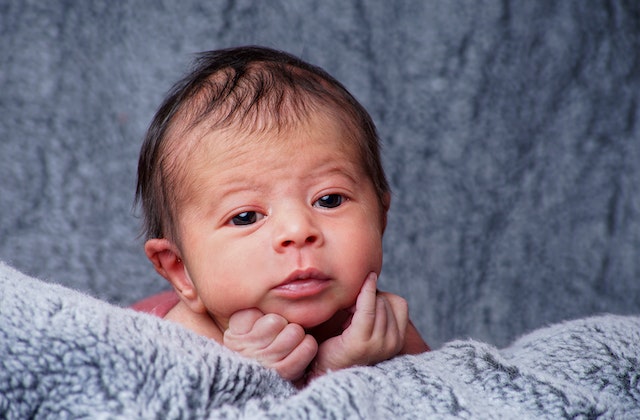
There are several plausible reasons why babies engage in staring, and it is typically nothing to worry about. Staring is a natural behavior for most babies, and understanding the underlying factors can provide valuable insights. So, if you have ever wondered what captivates your baby’s attention, read on to discover the potential reasons behind their intense focus.
One significant aspect of a baby’s stare is their developing cognitive skills and ability to communicate. During the first few months of life, babies undergo rapid growth and are inherently curious about their surroundings. Everything they encounter is new and intriguing to them.
Here are some common reasons why babies engage in staring:
- Curiosity: Babies have a natural inclination towards curiosity, and staring is one way they begin to explore and understand their environment. By observing their surroundings, they initiate the learning process and gradually gain knowledge about the world.
- Alertness: Staring can indicate a state of heightened alertness. When babies fixate on their gaze, it signifies their active engagement with their surroundings. Quiet observations indicate that their minds are attentive and receptive, facilitating optimal brain development.
- Colors: Vision development in babies involves exposure to vibrant colors. Your baby may stare at the colors of your hair, clothes, or even simple objects like furniture or books that capture their attention. Exploring various colors contributes to their visual development.
- Developing Brains: Babies may stare as they actively work on developing and growing their brains. Their intense focus reflects their ongoing cognitive processes. It is important to note that a child’s brain is said to be 90% developed by the age of 6 years.
- Movements: Babies may turn their gaze towards moving objects as they refocus their attention. They are naturally drawn to motion and may exhibit increased staring when exposed to stimuli like being outdoors or observing a rotating fan.
- Outstanding Features: Babies may fixate on items or individuals with distinctive features such as glasses or earrings. Different patterns, textures, and accessories can catch their attention and hold their gaze.
At What Age Do Babies Start Having Good Vision?
Babies are born with eyes that are physically capable of seeing, but their visual processing abilities are still in the early stages of development. Consequently, their perception of the world may be blurry and indistinct during the initial period. While their eyes can detect bright colors from birth, it takes time for their brain to fully process visual information, leading to improved visual acuity over time.
By the age of 3 to 4 months, babies typically develop the ability to differentiate between colors, particularly red and green. This signifies a significant milestone in their visual development. As their brains continue to mature, so does their capacity to see with greater clarity, enabling them to comprehend and navigate their environment more effectively.
It is important to note that a baby’s visual progress occurs gradually, with their sight becoming clearer and more refined as each month passes. This ongoing development of visual acuity is an essential aspect of their overall growth and maturation.
How Babies Eyes Develop As They Grow and Keep Staring
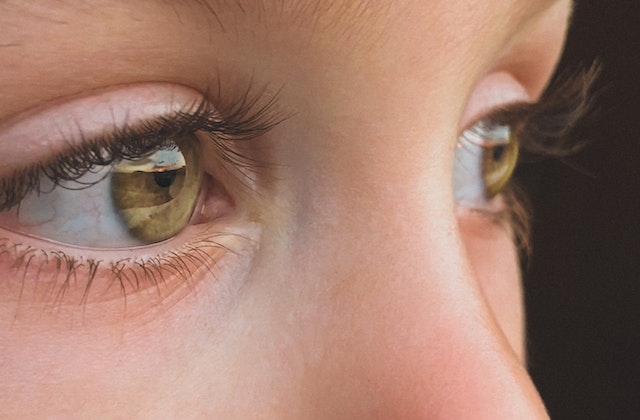
Each baby’s visual development progresses at its own pace, and it is important to remember that not all children reach milestones at the same time. Here are the different stages of a baby’s visual development:
At Birth:
During this stage, babies are drawn to high-contrast images because their ability to move their eyes between objects and distinguish between them is not yet fully developed. They primarily focus on objects that are approximately 8 to 10 inches away from their face, such as their parent’s face.
First Month:
In the first month of life, babies’ eyes begin to work together, and their vision starts improving. They can track moving objects with their eyes and may even reach out to them.
Second to Fourth Month:
Around this stage, babies’ vision becomes more refined. They can focus on their parents’ faces or the faces of other people near them. They develop the ability to track moving objects with their eyes and can start reaching for things by around three months of age.
During the first two months, it is common for a baby’s eyes to appear crossed or misaligned, as their eye coordination is still developing. However, if one eye consistently turns in or out, it is important to seek a professional evaluation.
Fifth to Eighth Month:
Depth perception, which allows the judgment of distances between objects, is not present at birth. It typically begins to develop around the fifth month when the eyes start working together to perceive a three-dimensional view of the world. By this stage, most babies have good color vision.
Eye movements and eye-body coordination skills continue to improve during these months. Crawling, which often starts around eight months, further enhances eye-hand-foot-body coordination. It is believed that babies who crawl more tend to develop better eye coordination compared to those who don’t.
Ninth to Twelfth Month:
At this stage, babies start pulling themselves up to a standing position. By 10 months, they should be able to grasp objects with their thumb and forefinger. Crawling becomes more proficient, and some babies may attempt to walk. They develop the ability to judge distances and throw objects with accuracy.
Encouraging crawling rather than early walking can help promote better eye-hand coordination.
First to Second Year:
By the age of 2, a child’s eye-hand coordination and depth perception should be well developed. They show a keen interest in exploring their environment, recognize familiar objects and pictures, and engage in scribbling with crayons or pencils.
Remember that these milestones are general guidelines, and individual variations are common. Monitoring your child’s progress and consulting with healthcare professionals can provide valuable insights into their visual development.
How to Help Your Baby’s Vision
As a parent, you play a crucial role in supporting and promoting your baby’s vision development. Here are some ways you can help:
- Create an Unobstructed View: Ensure that your baby’s crib provides a clear view from both sides, allowing them to use both eyes effectively. By changing the position of the crib periodically, you can expose your baby to different parts of the room and stimulate their visual exploration.
- Introduce Patterns: Expose your baby to patterns, particularly ones that change or move. For example, a mobile with a light source can create interesting shadows on the wall for your baby to observe and investigate.
- Engage with Verbal Interaction: While walking around the room, engage in conversation with your baby to encourage them to search for you visually. Let them scan the room and follow your movements. Maintain a constant dialogue, regardless of your location in the room. Providing opportunities for your baby to track your movements in various directions—right, left, up, and down—can support their visual tracking abilities.
- Face-to-Face Interaction: During dressing or feeding sessions, position yourself in a way that allows your baby to focus on your eyes. For optimal clarity, maintain a distance of approximately 8 to 10 inches between your face and your baby’s.
- Safe Toy Selection: Toys can be valuable tools for stimulating your baby’s visual development. However, it’s important to prioritize safety. Ensure that the toys you choose are age-appropriate, free from potential hazards, and meet safety standards. Always supervise your baby during playtime.
Remember, each baby develops at their own pace, and patience is key. By providing a supportive environment and engaging in activities that stimulate their vision, you can help foster healthy visual development in your baby.
When to Worry about Baby’s Staring
Babies stare because they are trying to make new connections and understand lots of new things. It is also important for parents to ask questions when they observe abnormalities.
If a baby fails to make eye contact in the first six months, immediate consultation with an expert is recommended. Below are things to observe from your baby:
- If your baby avoids looking at your face
- If your baby fails to recognize familiar faces.
- If your baby has a problem following objects visually.
- If your baby gazes out of the corner of the eye.
NOTE: Babies who are non-responsive to staring or gaze may be showing early signs of an intellectual disability. This disability called gaze-aversion could be an indication of a range of things, from seizure disorders, retina damage, or other developmental issues. So, if your baby’s stare toward strangers and family isn’t accompanied by an interaction like a social smile, it’s best to see a doctor and learn more.
The Bottom Line Is…
In the end, there are countless reasons why babies engage in staring behaviors. Each stare holds its significance and can be seen as a precious gift. If a baby fixates their gaze on you for an extended period, it is likely a sign of genuine interest.
Research conducted by a group of university scholars suggests that babies stare at people because they find them attractive. In one study, infants were presented with two images: one depicting a person considered beautiful and the other featuring a person deemed less attractive. Surprisingly, the babies showed a preference for beautiful faces.
The act of staring, whether at objects, movements, features, colors, or even at you, is all part of the developmental process. Babies’ brains are rapidly evolving and expanding. Moreover, the more you interact and bond with your baby through play and engagement, the more their brain development is enhanced.
It is crucial to cherish and embrace these moments of mutual gaze with your baby. Their curiosity and fascination with the world around them lay the foundation for their future growth and cognitive abilities. So, enjoy these precious moments of connection and know that you are actively contributing to your baby’s development.

Leave a Reply
You must be logged in to post a comment.